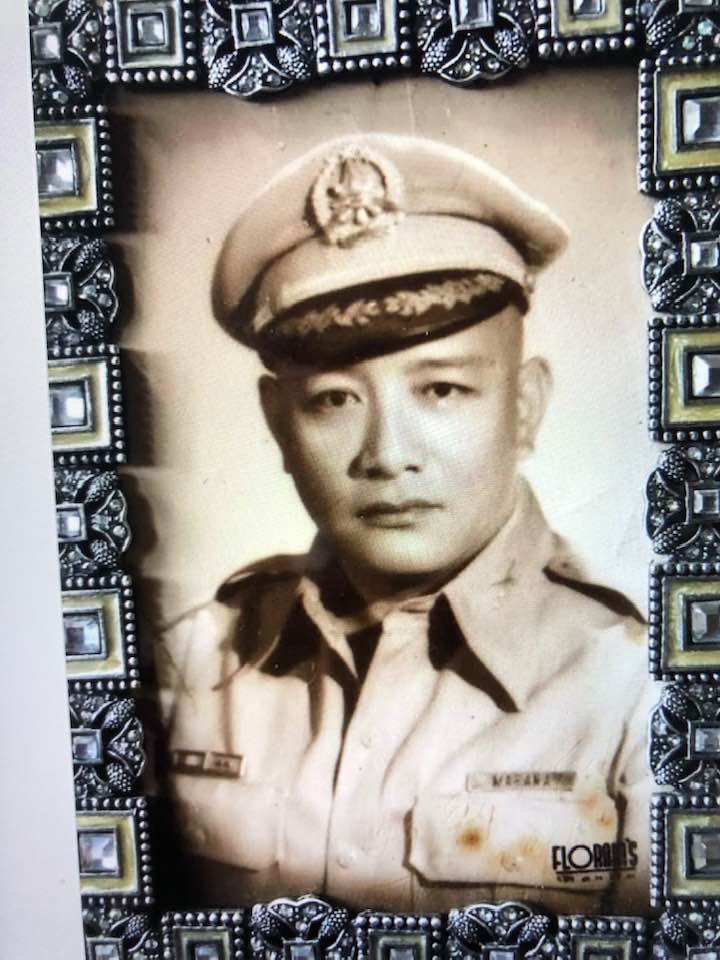
Recently, my family has been sharing a post I published back in 2014 with renewed interest in our grandfather (“Lolo” in Tagalog), Col. Laureano Maraña. Over the past few years I have been able to uncover a little bit more, including his unit flag which ultimately inspired the current Lakas Filipino Martial Arts emblem. Colonel Laureano Maraña (sometimes documented as Lt. Colonel Laureño Maraña?) was a Philippine Constabulary (PC) Provincial Commander of Cavite, and is recognized, even in United States military archives today, for forming and leading the counterinsurgency group “Force X”. The “Lakas” in Lakas Filipino Martial Arts comes from the Tagalog word for force, so Lakas Filipino Martial Arts is an homage to my Lolo and Force X. Ultimately, he was assassinated by the mercenary Nardong Putik, who according to my dad, was in turn was hunted and killed by Col. Maraña’s own godson.
Lt. Colonel Laureano Maraña
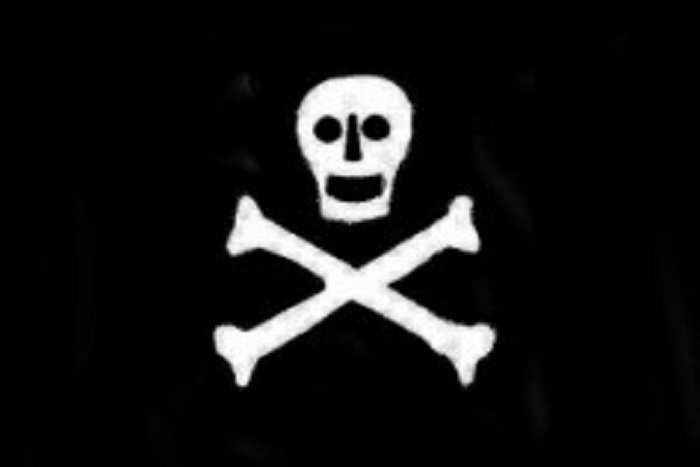
In 1954, our grandfather then-Major Laureano Maraña, the former head of Force X of the 16th PC Company, assumed command of the 7th Battalion Combat Team (BCT) from Colonel Valeriano (aka “Phantom”), which had become one of the most mobile striking forces of the Philippine ground forces against the Hukbalahap. Force X employed psychological warfare through combat intelligence and infiltration that relied on secrecy in planning, training, and execution of attack. The elite 7th BCT in Bulacan developed a reputation toward employing a more comprehensive, more unconventional counterinsurgency strategy (“terror attacks”) that ultimately reduced the random brutality wrought by the Hukbalahap against the civilian population. The 7th BCT “Markang Bungo-Tapat” (original mark of the skull), sometimes “Markang Bungo” (mark of the skull, or “Death’s Head”) and sometimes simply “Tapat” (original) was evolved from the famed “Nenita Unit” as well as Force X, and operated under the knowledge, consent and approval of then Presidents Ramon Magsaysay, Quirino, Garcia and Macapagal. In records of President Magsaysay’s activities, he frequently congratulated then-Major Maraña personally for his efforts. My Lolo on the other side of the family, vividly remembers the “skull and bones” flag of Col. Maraña and his men, as they were active in the province of Pampanga. Force X was nicknamed “the Skull Battalion” for this reason.
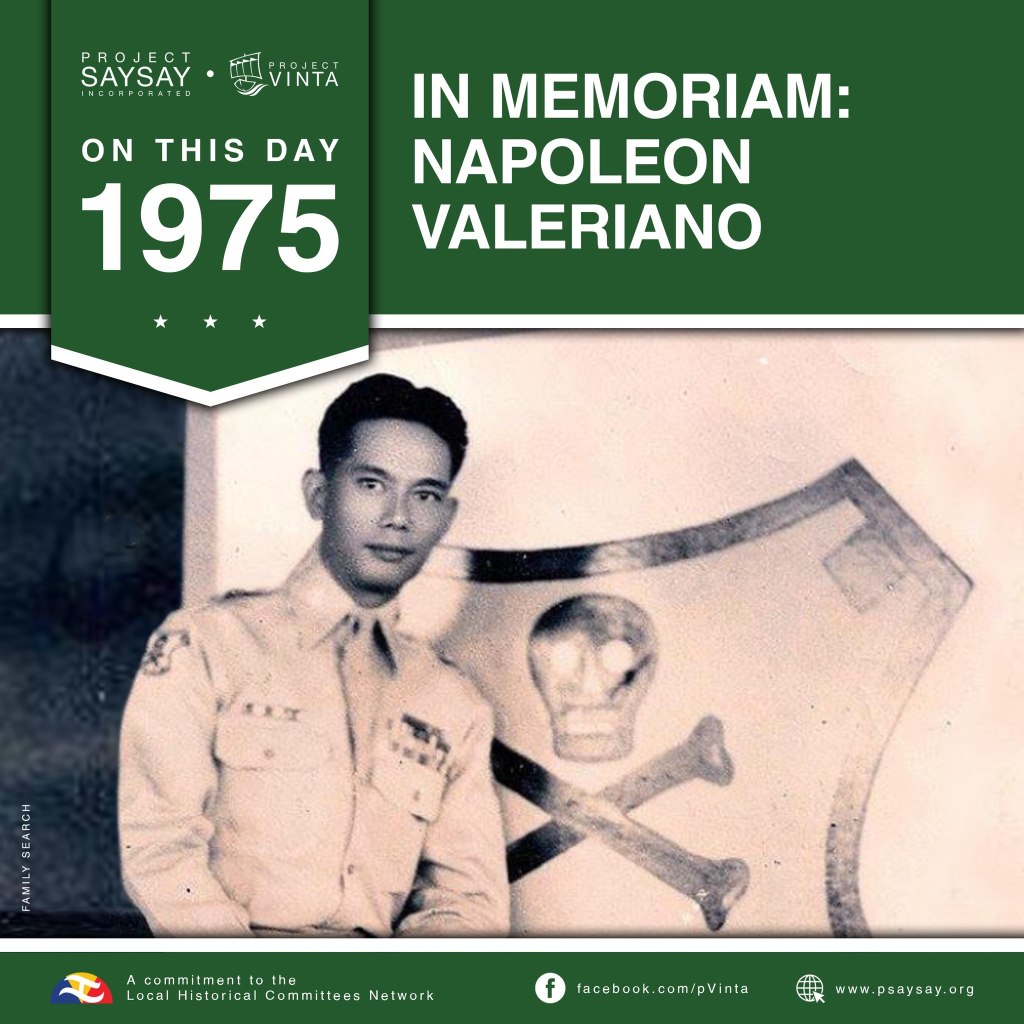
The Nenita Unit, “Markang Bungo” (1946-1949) was the first special forces hunter-killer counter guerilla special units created to deploy in the campaign against the Hukbalahap (or, the “Huks”). The Nenita Unit, or Nenita Force was commanded by then Major Napoleon Valeriano but backed up by his deputies, including our Lolo Laureano Maraña. Using the skull and bones as its emblem, the Nenita Unit (aka “Skull Squadron”) had a strength of four officers and 50 enlisted men, and it was said that “rivers turned red with the blood” of those that opposed the Markang Bungo.
The Nenita Unit and Force X
Shortly after the Secretary of National Defense reorganized the constabulary, the government authorized the one truly successful anti-insurgent operation during the first phase of the insurrection — “Force X.” This special force was envisaged to operate deep within enemy territory under the guise of being a Huk unit itself. As such, the force would be valuable in obtaining intelligence and carrying out small unit operations such as kidnappings of Huk leaders and ambuscades. Force X was created to take advantage of a period when Huks operated freely in central Luzon but when their command organization was loose and inexperienced.
Philippine Army Colonel Napoleon Valeriano, commander of the Nenita Unit, a special constabulary force that operated in the area of Mount Arayat from 1946 until 1949, selected the 16th Police Constabulary company, under the command of his Lieutenant Maraña to become Force X. Secretly screening his unit for the most devoted and aggressive men, Maraña selected three officers and forty-four enlisted men who departed their barracks under the cover of darkness and moved to a secret training camp in the nearby jungle. The camp’s location and purpose were known only to the president, the Army Chief of Staff, Col. Valeriano, and three of the president’s closest staff officers. At the camp, the unit was stripped of issued clothing and equipment, and given captured weapons and old civilian clothes. Using three captured guerrillas as instructors, Force X received training in Huk customs, practices, and tactics to help them pass as the enemy. Each man assumed an alias as well as a nickname, a technique favored by the Huks, and began to live life as a guerrilla.
After four weeks of intensive training and a careful reconnaissance into the area where Force X would initially venture, the unit was almost ready to go. To complete the scenario, Colonel Valeriano recruited two walking-wounded from an Army hospital in Manila and secretly transported them to the training camp. At 1700 hrs, 14 April 1948, Force X fought a sham battle with two police companies and withdrew with their “wounded” into Huk country. Four hours later they were met by Huk troops, interrogated as to who they were and where they had come from, and were taken into Candaba Swamp where they met Squadrons 5 and 17. Maraña convinced the commander of his authenticity (a story based on the death of a genuine Huk leader) and was promised that he and his forces would be taken to Taruc. The cover was working better than expected.
Force X spent two days at the base-camp learning a great deal about local officials, mayors, and police chiefs who were Huk sympathizers and about informants within the constabulary. As they awaited their appointment with Taruc, they were joined by two other squadrons, one of which was an “enforcement squadron” whose members specialized in assassination and kidnapping. On the sixth day in camp, Maraña became suspicious of Huk attitudes and ordered his men to prepare to attack the assemblage. Quietly removing heavy weapons (including four 60mm mortars, two light machine-guns, 200 grenades, and a radio) from hidden compartments in their packs, Force X attacked the unsuspecting squadrons. In a thirty-minute firefight, Force X killed eighty-two Huks, one local mayor, and captured three squadron commanders.
After radioing for reinforcements to secure the area, Force X took off on a two week long search and destroy mission, accompanied this time by two infantry companies. During seven engagements, government troops killed another twenty-one guerrillas, wounded and captured seven, and identified seventeen Huks in local villages. Force X’s success did not stop when it withdrew at the end of the operation. Three weeks after the incident at the Huk base-camp, two squadrons stumbled onto each other and, each assuming that the other unit was Force X, opened fire. The panic and mistrust that Force X put into Huk ranks cost the insurgents eleven more dead from this chance encounter. This was just one example of how devastating Force X was to the Huks, that they would willingly engage in friendly fire out of fear, rather than engage Force X.
The Bandit Nardong Putik
Leonardo Manecio (sometimes credited as “Manicio” aka Nardong Putik was a Filipino gangster turned folk hero. An amulet-wielding hoodlum from Cavite province, Putik credited his ability to survive and escape numerous ambushes and gunfights to his anting-anting (amulet). Nardong Putik’s ability to elude the law and his enemies made him a legend to many people. Philippine Constabulary (PC) files show Putik was involved in various criminal cases which ranged from illegal possession of firearms to kidnapping, armed robbery and murder starting from 1948. Among the major cases in which Putik was involved in were the infamous Maragondon (Cavite) Massacre in 1952 where the mayor, police chief and several policemen were killed with hunting knives, and the 1957 Election Day killing of our Lolo, Lt. Colonel Laureano Maraña, then provincial commander of Cavite, and seven others. Unscrupulous politicians were also found to have been in league with the bandit, utilizing him in their struggle for political supremacy.
The Lakas Filipino Martial Arts logo as of August 2022 is my homage to Force X’s “Skull and Bones” flag.

Sources
Counter Guerrilla Operations The Philippine Experience by Colonel Napoleon D. Valeriano
https://archive.org/details/dli.ernet.168143
“Edward Lansdale: The Unquiet American” by Cecil B. Currey
Friends and Enemies: The Philippines and Cuba During the Cold War
History of US armed intervention in the Philippines posted on October 18, 2010 by Ka Frank
In Memoriam: Napoleon Valeriano
https://www.facebook.com/share/p/1AXhUuy6Z3/
Ramon Magsaysay
https://archive.org/stream/MOP-Vol1-Ramon-Magsaysay/5OR%20-%20RM_djvu.txt
The Armed Force of the Philippines and Special Operations by Antonio R. Lastimado Arturo G. Rojas
The Hukbalahap Insurrection: A Case Study of a Successful Anti-Insurgency Operation in the Philippines – 1946-1955 by Major Lawrence M. Greenberg
The no. 1 nemesis of the Huks in the 1950s: Colonel Valeriano on the Huk War by Juan T. Gatbonton
The Sunday Times Magazine, August 11, 1963
https://www.facebook.com/share/p/1Lg5ZuHd7g
Toward a New Counterinsurgency: Philippines, Laos, and Vietnam
 LAKAS FILIPINO MARTIAL ARTS